LightShop:
High-Precision Interactive Computational Light Painting
Abstract
Light painting is a photographic technique that integrates light cast by a handheld light source during the capture of a long-exposure photograph. This creates an image roughly equivalent to that of a static light source with geometry matching the captured motion of the light. Unfortunately, light painting is limited by the precision of hand motion, the inability to visualize progress during the painting process, and occlusions caused by the painter during capture. We introduce LightShop: an interactive system that helps users capture high-precision light paintings with a projector and real-time tracking from a head-mounted display (HMD). LightShop helps users compose, previsualize, and capture precise light paintings with guidance from AR-based interfaces, using a novel computational exposure strategy to isolate light cast by the intended emitter on the scene. We demonstrate that LightShop lets users easily capture complex reflections and refractions among real objects illuminated by precisely constructed virtual light emitters.
Light Painting
Light painting is a photographic technique where a handheld light source is moved through a camera’s field of view during a long exposure, creating an image equivalent to one illuminated by a virtual light source shaped like the swept path.
What makes it uniquely compelling is that the captured images show real physical environments responding to painted emitters, effortlessly reproducing complex reflection, refraction, and scattering that no rendering technique can replicate without a full model of the scene’s geometry and materials. The camera simply records what the light does.
This lets light painters create images that no other current technology can reproduce, which has made it an enduring art form with practitioners around the world.
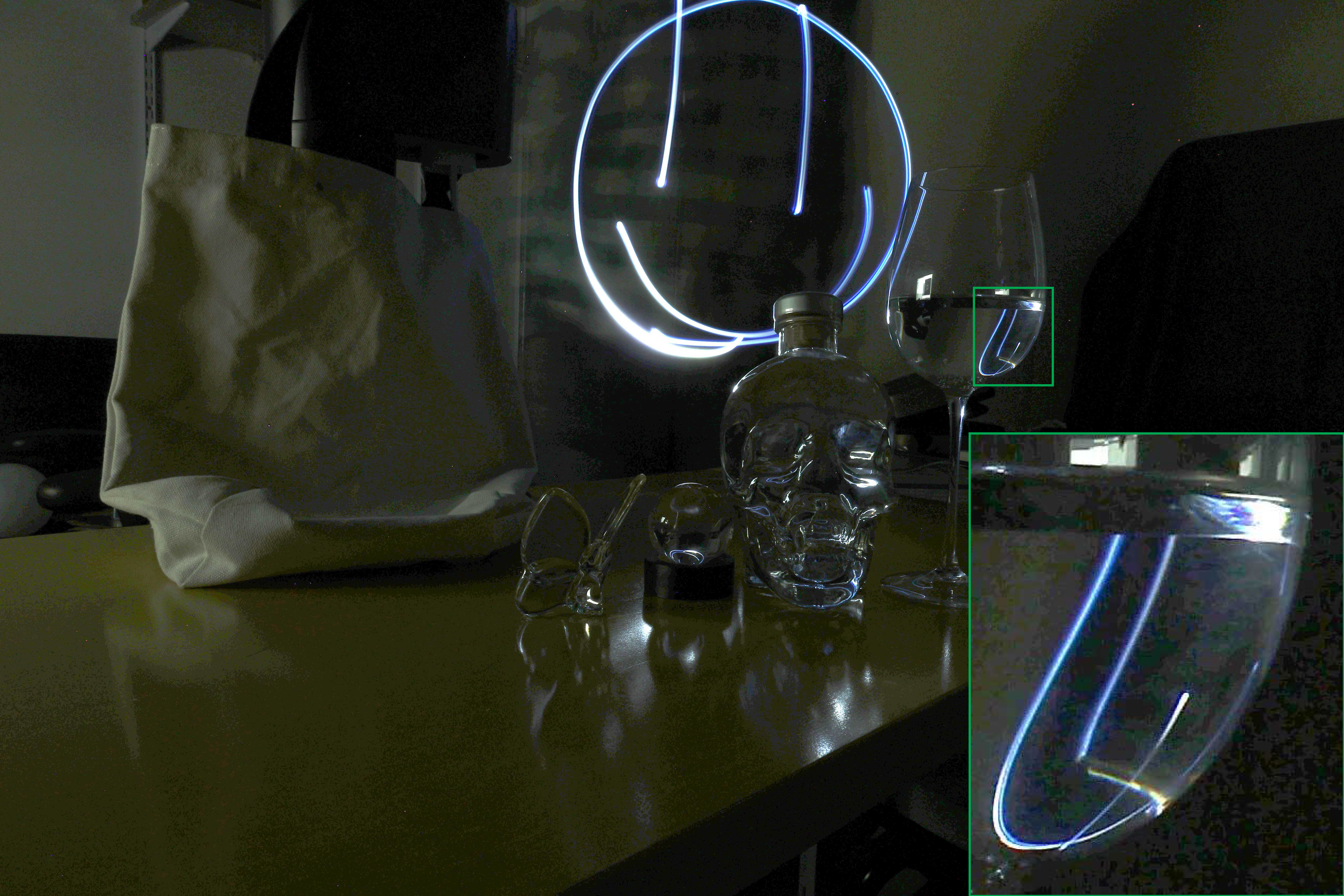
The wine glass refracts the light beautifully, but the emitter geometry is imprecise and unconstrained due to hand motion.
But traditional light painting has two fundamental problems:
Precision
Painting precise emitter geometry by hand is extremely difficult. The artist cannot see the shape they are tracing while they trace it, and any hand shake directly degrades the result. Complex 3D geometries (or even clean 2D curves) are effectively impossible to reproduce accurately with a handheld light source.
Obstruction
Any light that falls on the painter during the exposure is recorded in the final image, burning ghosted silhouettes of the artist’s body into the photograph. To avoid this, some artists throw the light source across the frame, but this completely relinquishes control over where it travels, trading one problem for the other.
How LightShop Works
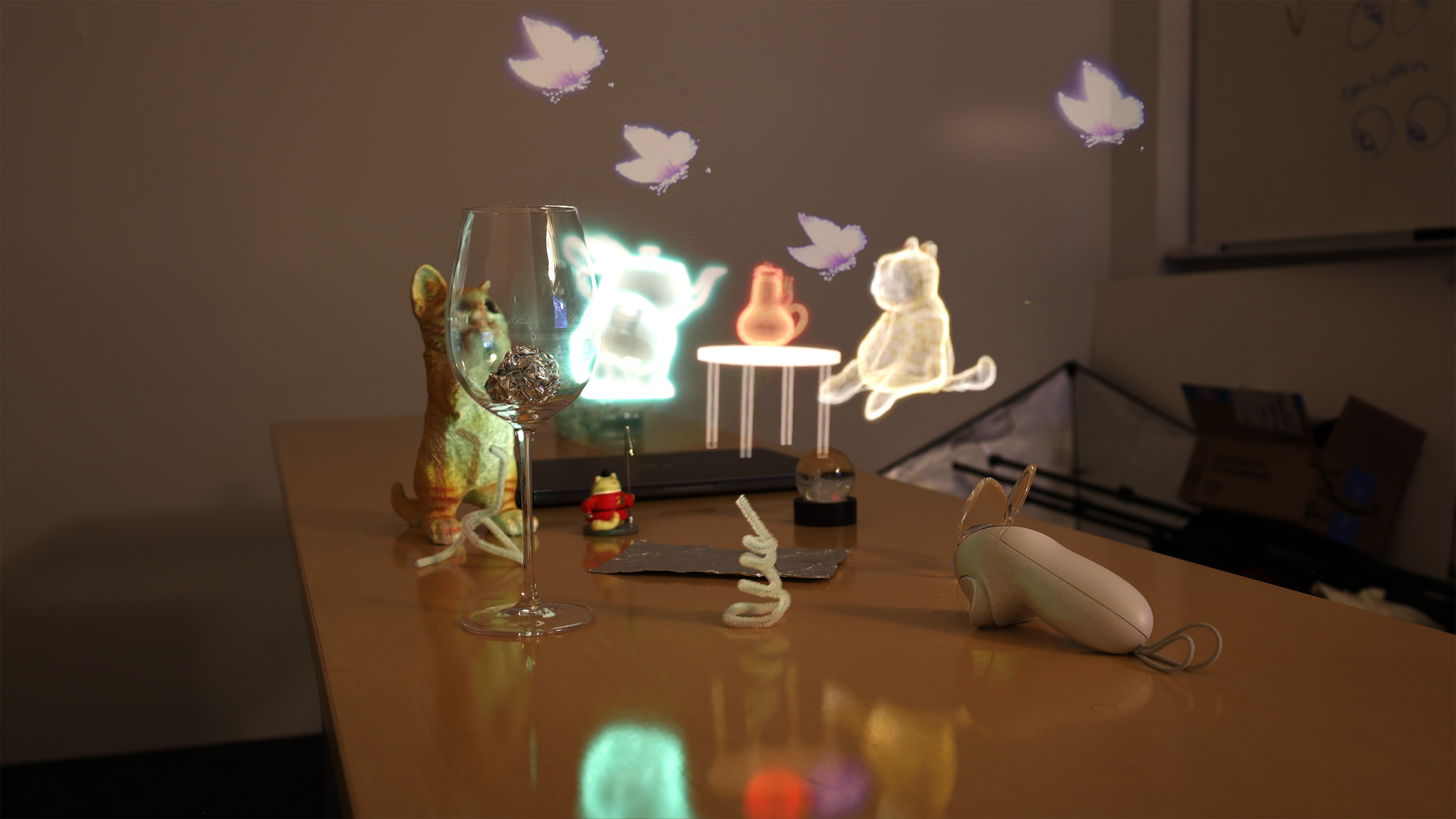
LightShop treats light painting as a fabrication problem: it builds up a virtual light emitter slice-by-slice using a projector and a handheld projection surface called a Poi, guided throughout by an AR head-mounted display.
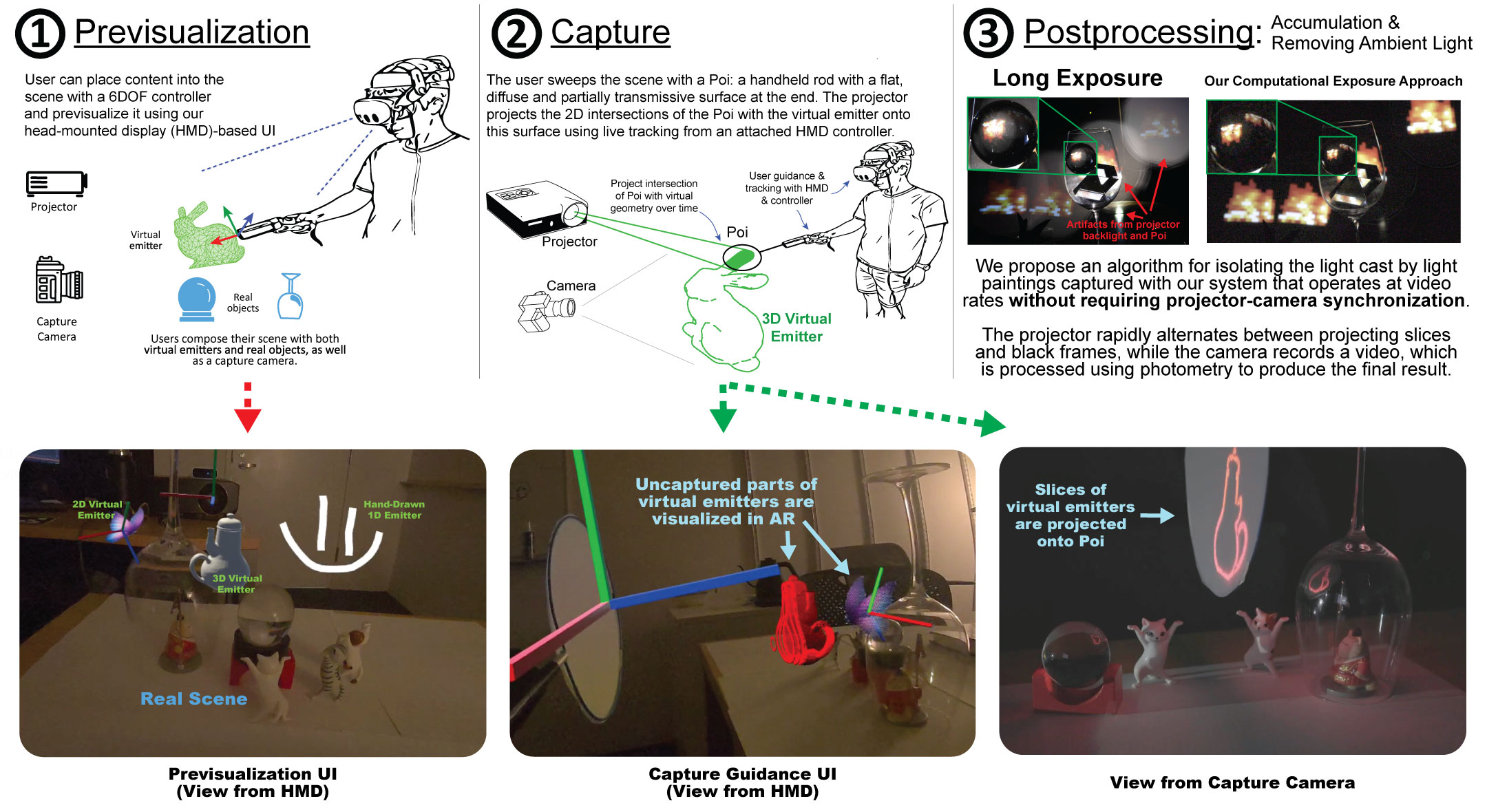
Computational Exposures
By subtracting ambient illumination from each captured slice using a novel algorithm that does not require synchronization between the projector and camera, LightShop isolates only the light contributed by the virtual emitter, eliminating the visible Poi, the painter’s body, and stray ambient light that corrupt a traditional long exposure. The result captures physically accurate inter-reflections and refractions that inverse-rendering techniques currently cannot reproduce from real scenes.
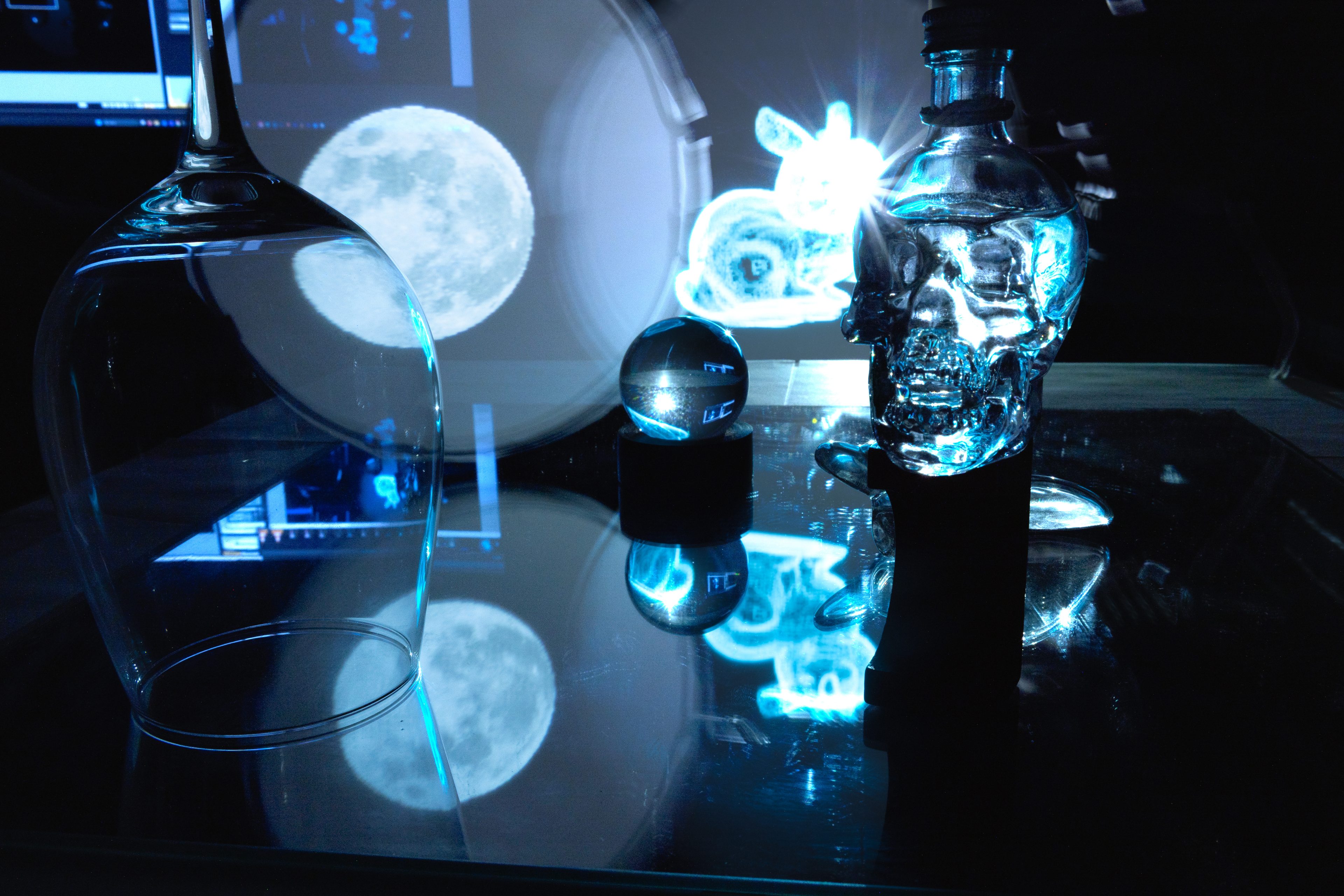
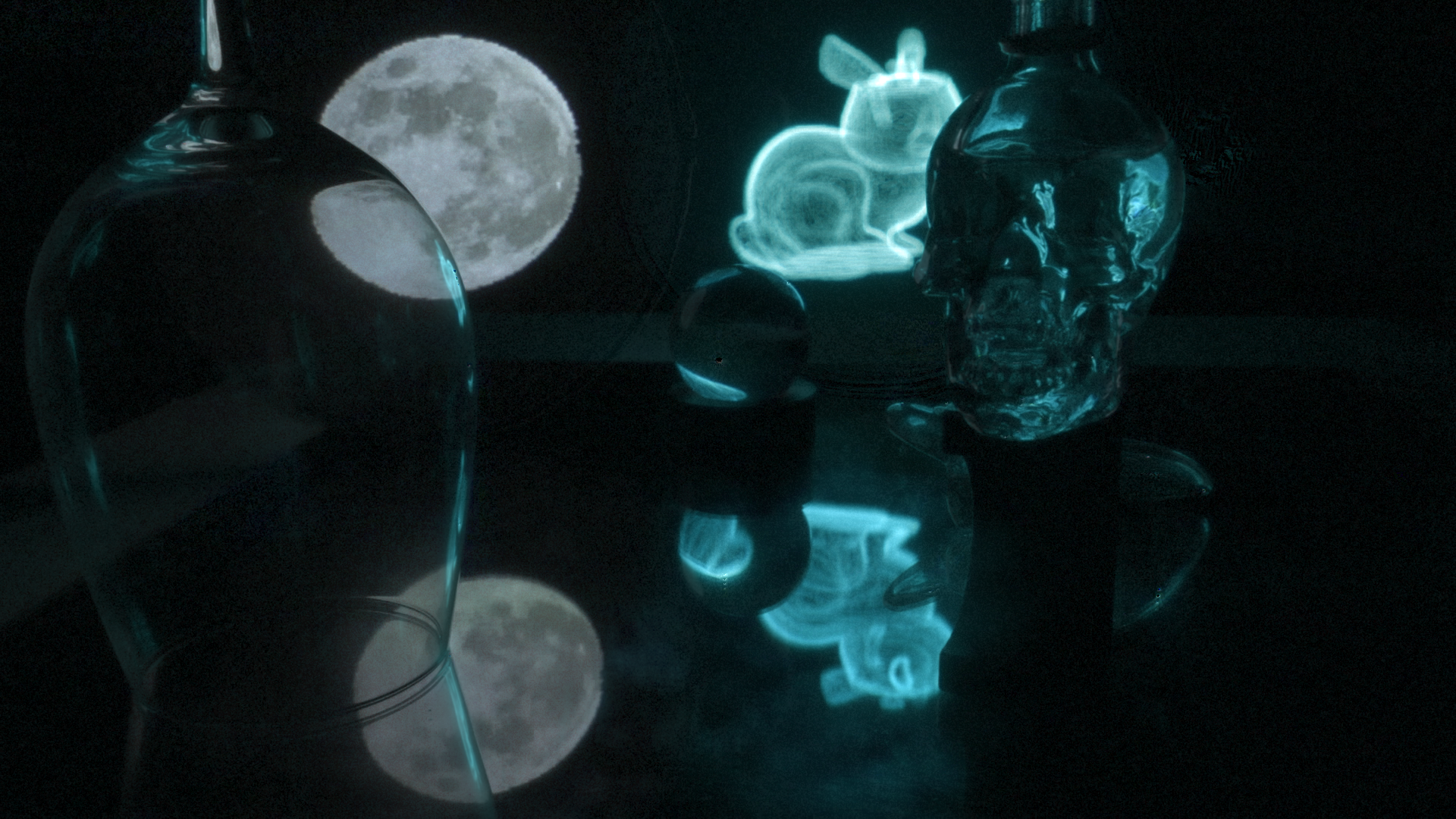
Participant P1’s painting: a Stanford bunny with a Utah teapot for a head. The computational exposure (right) removes all ambient and Poi artifacts, revealing complex specular inter-reflections between the virtual emitter and real objects.
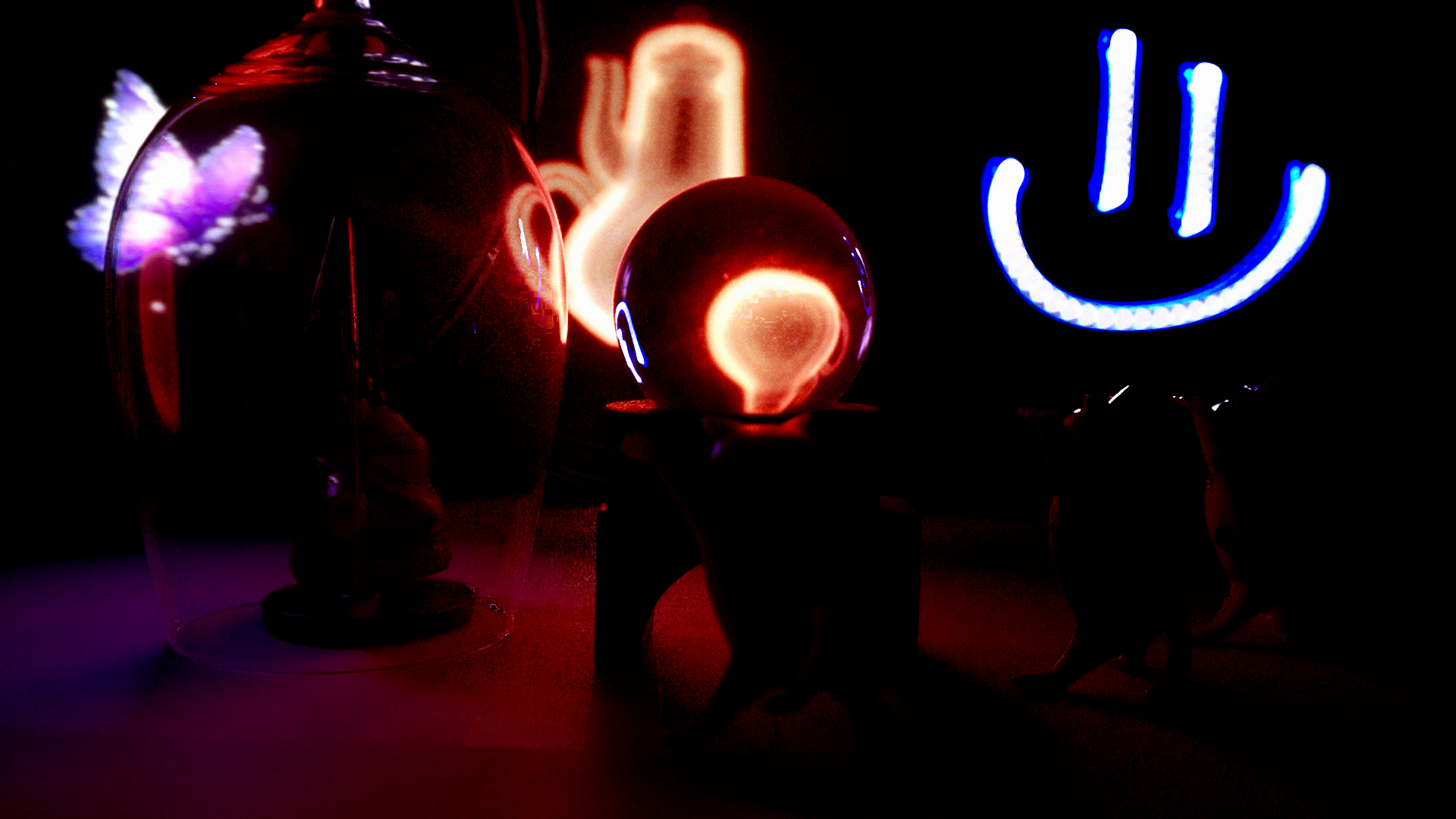
Complex multi-object scene with multiple virtual emitters, captured using computational exposure.
Virtual emitter geometry producing complex light interactions with real objects in the scene.
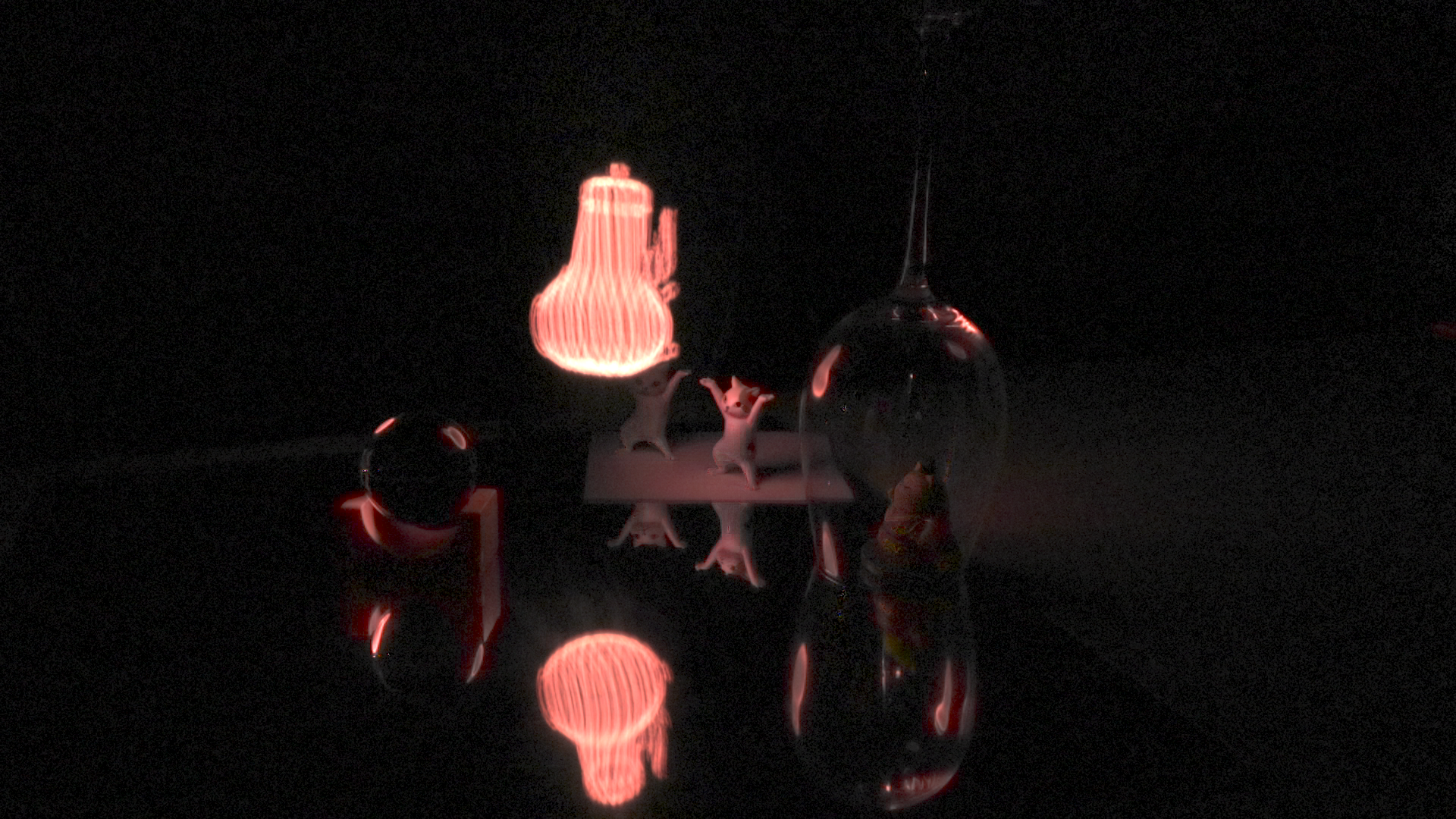
Virtual teapot emitter above a mirror, capturing the emitter’s reflection alongside real cat figurines.
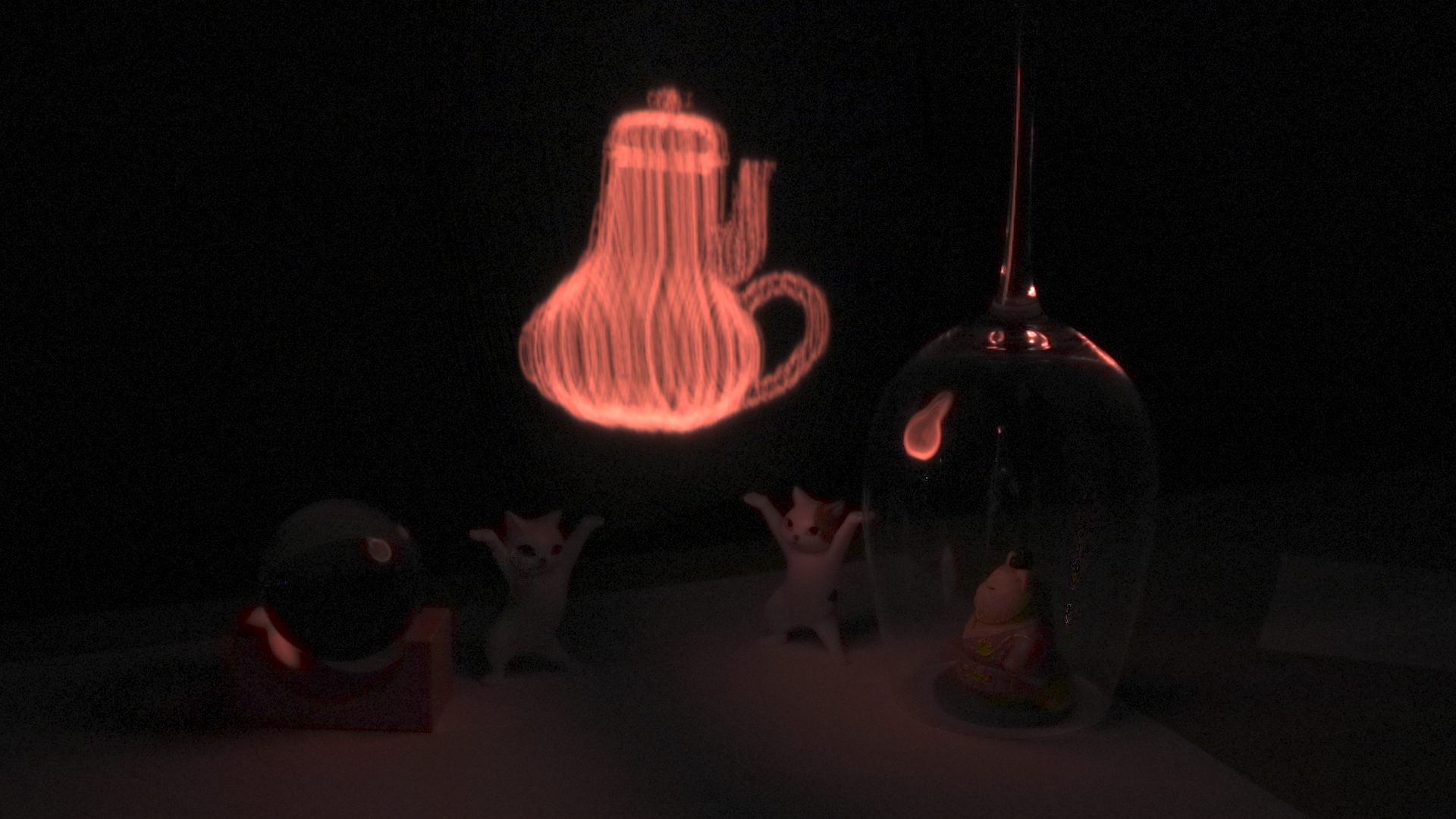
Virtual teapot emitter composited with real cat figurines, showing how virtual light interacts with real scene geometry.
Animated Light Paintings
LightShop supports animated light paintings: the system advances each frame of an animation as the user sweeps the Poi.
Live Stamp Mode
In live stamp mode, users decide where to place each stamp at capture time by pressing a button on the HMD controller. Each press projects the selected stamp onto the Poi at its current location, and previously projected stamps are shown as overlays in the HMD’s AR view, giving users a running record of what they’ve painted so far without interrupting the exposure.
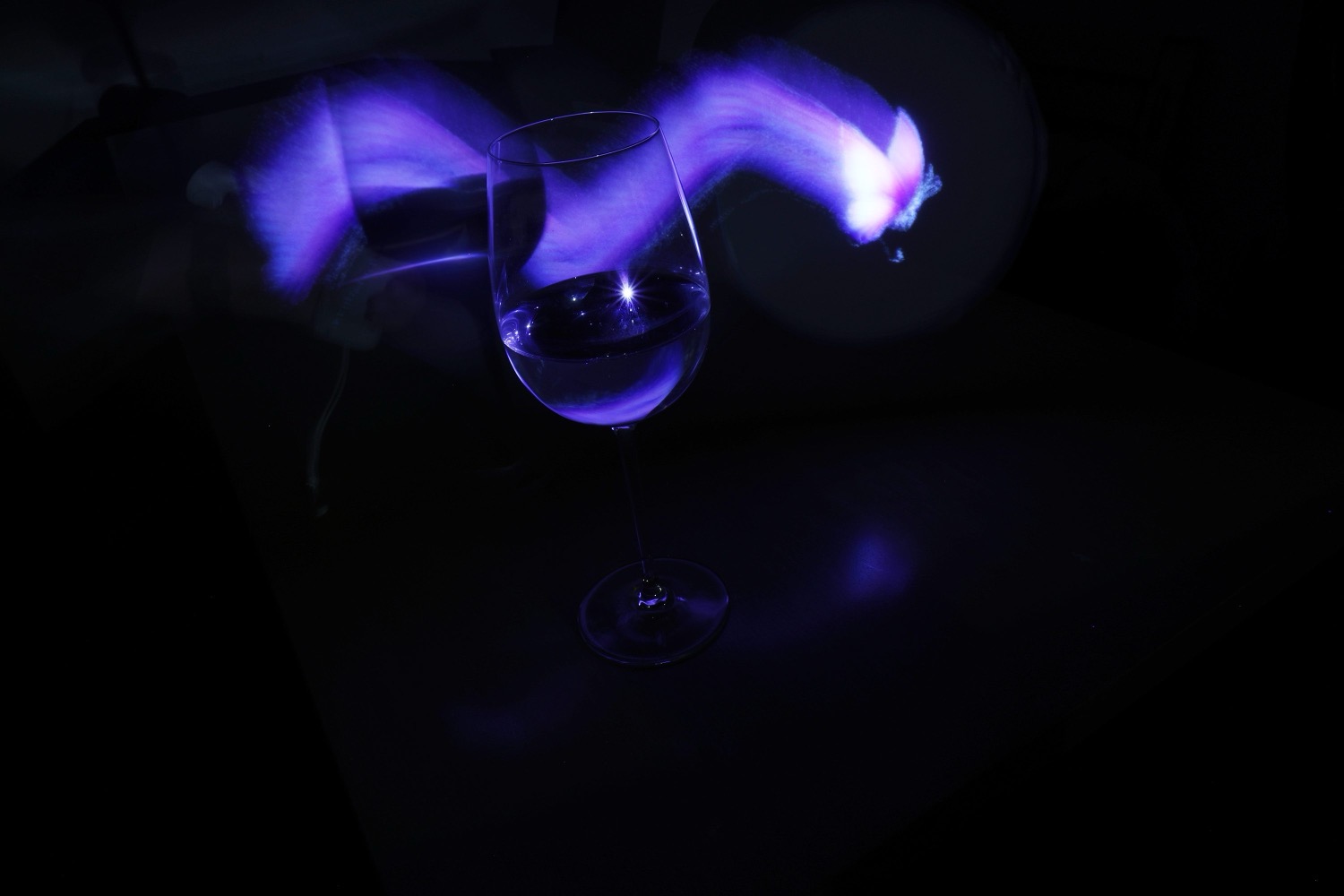
A butterfly stamp swept in live mode behind a wine glass, demonstrating how LightShop’s stamps interact with physical scene elements.
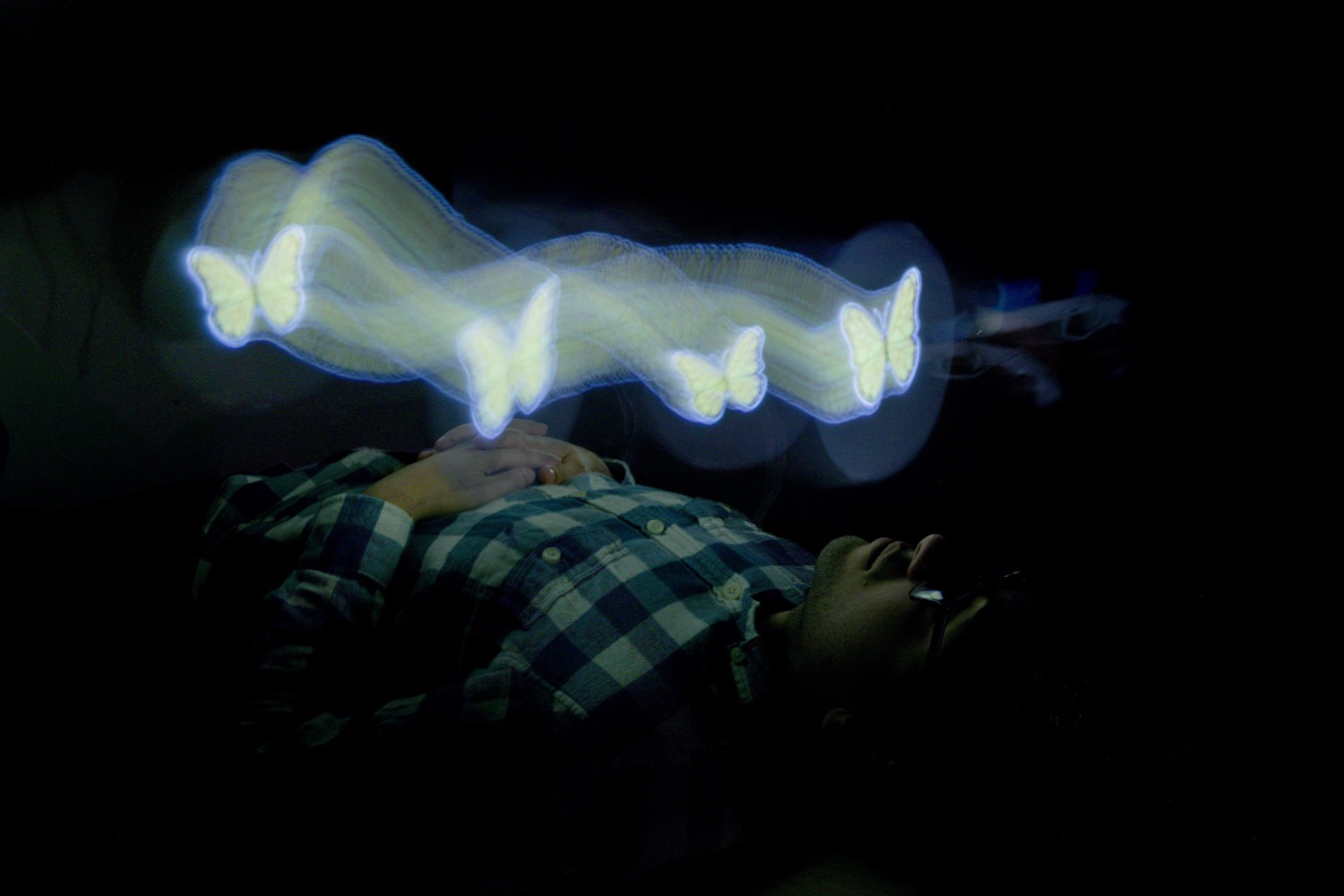
“Sweet Dreams”: a butterfly stamp swept over a sleeping subject, showcasing LightShop’s ability to incorporate people into light paintings.
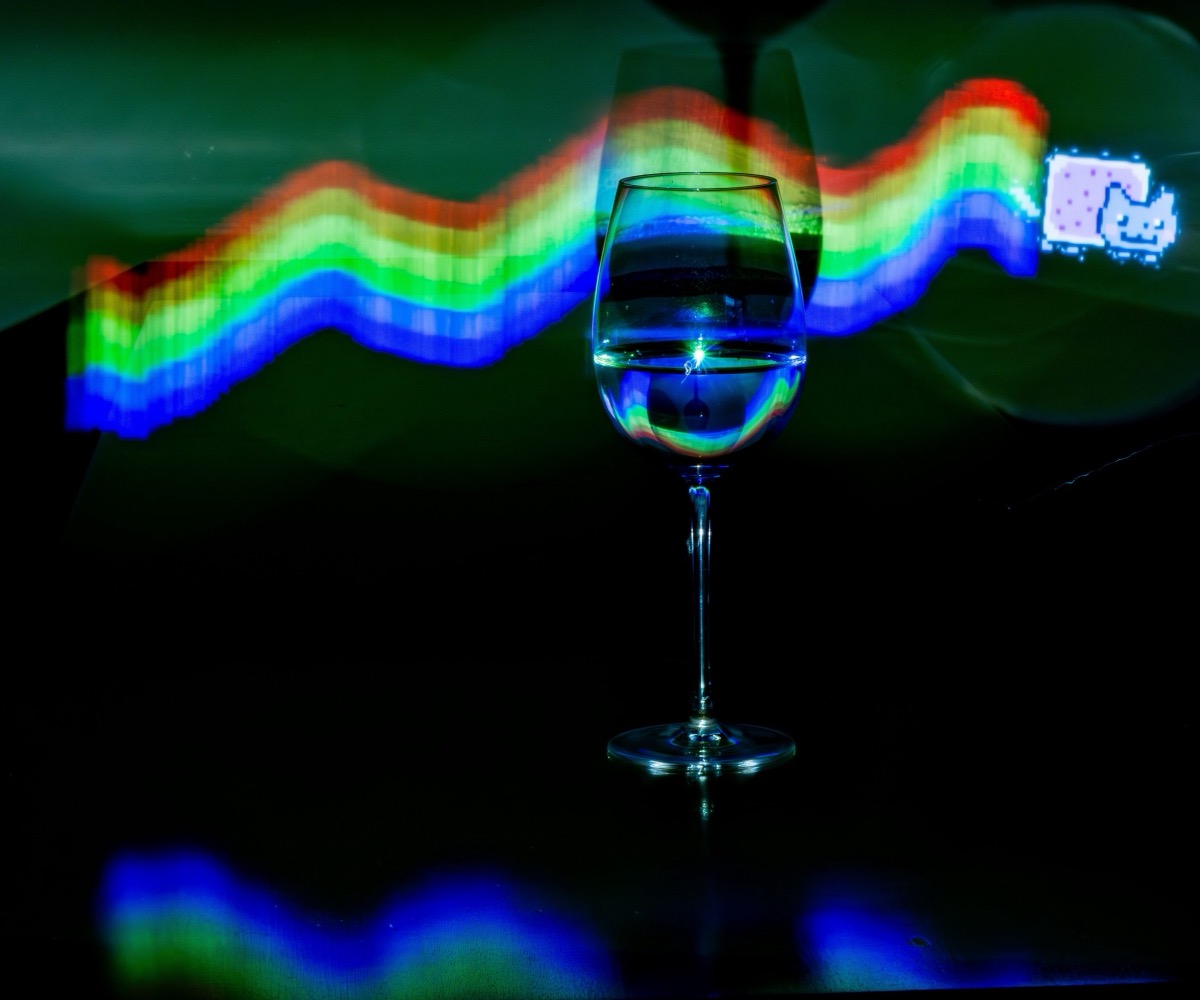
“Nyan Cat” with a rainbow stamp swept in live mode, illustrating LightShop’s flexibility for freeform creative exploration.
User Study Results
Five novice participants created light paintings with LightShop in a 60-minute session, ranging from pre-planned 3D emitters to freeform live stamp compositions.
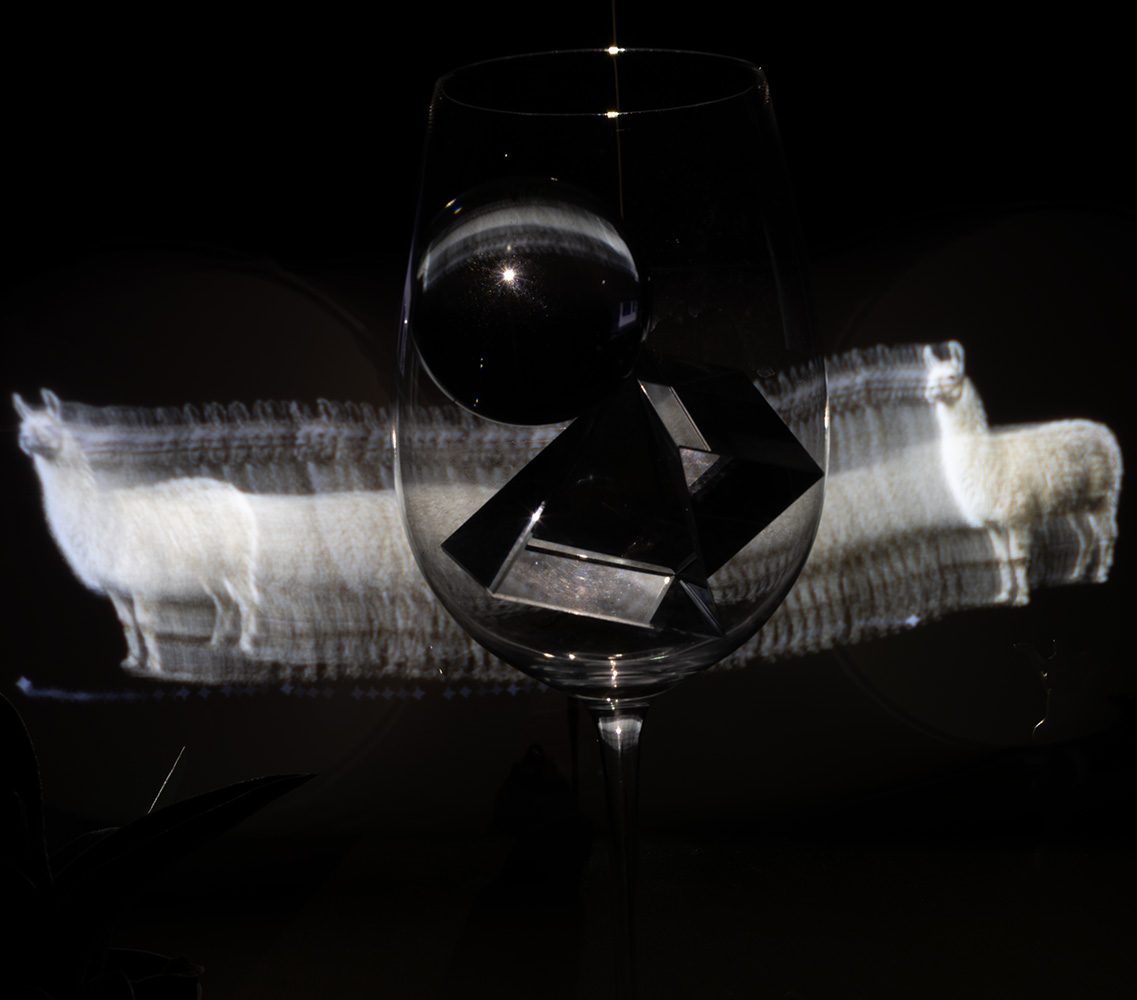
“Sausage Llama” by participant U2, created using a generative AI stamp in live mode.
BibTeX